
Retain Your

Lower Benefit Costs.
My firm creates custom executive & employee benefit strategies for business
owners to improve retention, reduce unnecessary costs, and build more
efficient benefit programs.

Retain Your
Lower Benefit Costs.
My firm creates custom executive & employee benefit strategies for business owners to improve retention, reduce unnecessary costs, and build more efficient benefit programs.

What WE Focus On
We work with family owned and privately owned business owners to evaluate and improve their employee benefits plans.
The goal isn’t to add complexity or increase spending. It’s to make sure what
you’re already doing is actually working.
That often means:

Identifying inefficiencies in current
benefit structures
Aligning benefits with retention goals
Improving how value is delivered to employees
Creating a more sustainable long-
term approach

What WE Focus On
We work with family and private business owners to evaluate and improve their employee benefits plans.
The goal isn’t to add complexity or increase spending. It’s to make sure what
you’re already doing is actually working.
That often means:
Identifying inefficiencies in current
benefit structures
Aligning benefits with retention goals
Improving how value is delivered to employees
Creating a more sustainable long-
term approach
What This Is (And What It Isn’t)
This isn’t about selling a new benefits package.
It’s about evaluating what you already have, and determining whether it’s structured in a
way that actually supports retention and cost control.
In some cases, no changes are needed. In others, small structural adjustments can make a
significant difference.
What This Looks Like
in Practice


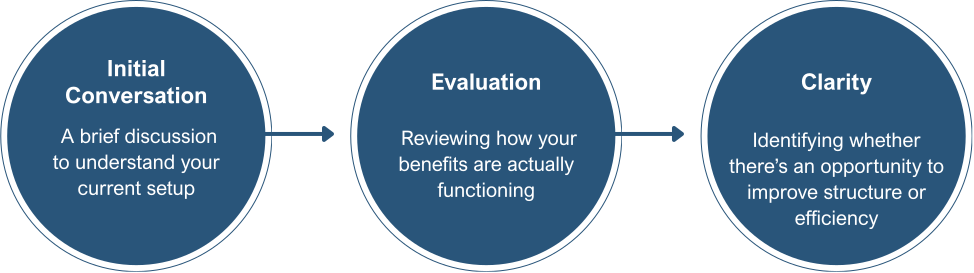
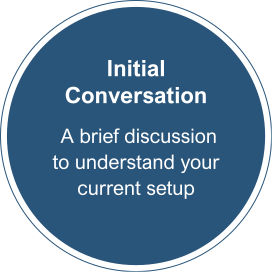
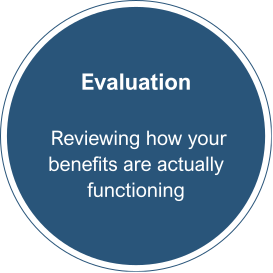
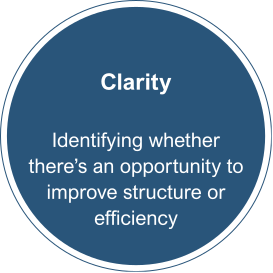
Not every business needs to make changes, and that’s part of the process.
What Most Businesses Don’t Realize
A company offers “good” benefits, but employees still leave because
their out-of-pocket costs are too high
Another business increases spending every year, but retention
doesn’t improve
A team stays fully staffed, not because they’re paid the
most, but because the benefits actually feel valuable
In many cases, it isn't the benefits, but how they're structured and communicated to your employees.


I’m Marty Ellner
I’ve spent over 30 years working with business owners on
financial and benefit strategies.
Over that time, I’ve seen how much impact keeping good employees and having good benefit plans can have on a business, both financially and operationally.
Many companies are doing what they’ve always done…
But the environment has changed.
My focus is helping business owners adapt in a practical, realistic way.
A Different Way to Think
About Benefits
Most businesses assume the solution is to spend more. In many cases, it isn’t.
The real opportunity is often in how benefits are structured, not how much is spent.
That shift alone can change how employees perceive value, and
how businesses manage cost.
Who WE Typically
WORK WITH:
Private or family-owned businesses
10+ full-time employees
Companies focused on long-term retention
Business owners looking for clarity, not complexity
Take a
Closer Look
If you’re unsure whether your current approach is working as well as it could…
A short conversation can quickly show whether your current setup is helping or quietly costing you.
For businesses with USA based employees.
© 2026 Ellner Financial Network. All rights reserved.